
It Doesn’t Have to Be Sin to Slow You Down
After growing up in church, it aggravates me how much the church would hyperfocus on sin being a limiting factor to freedom, but neglects the obvious weights that could also pull us down. The greatness inside us is usually blocked by things we’ve picked up along the way—knowingly or unknowingly. We run into them every time God’s call whispers at the edge of our fear. And sometimes the issue isn’t even our sins—it’s unnecessary weight that slows the Christian life down so quietly you don’t realize you’re in a race.
Hebrews 12:1 puts language to that:
“Therefore, since we are surrounded by so great a cloud of witnesses, let us also lay aside every weight, and sin which clings so closely, and let us run with endurance the race that is set before us.”
Sin is clear: it’s any thought, attitude, or action that chooses the desires of the flesh—those deceitful desires—over surrender to God’s will. Sometimes it’s the obvious things, even sexual sins. Sometimes it’s the hidden things. Either way, sin clings close. It wants to entangle, like a besetting sin that fights to keep first place.
Now, that alone may have convicted you, so I’m just going to move on.
But the verse says to lay aside every weight. Interestingly, the verse doesn’t say the weights cling closely to us, but sin does. Possibly because when you’re weighed down by extra weight, you become vulnerable, and sin gets much closer.
If this were a Psalm, I’d put a Selah after that.
Weights Aren’t Always Obvious
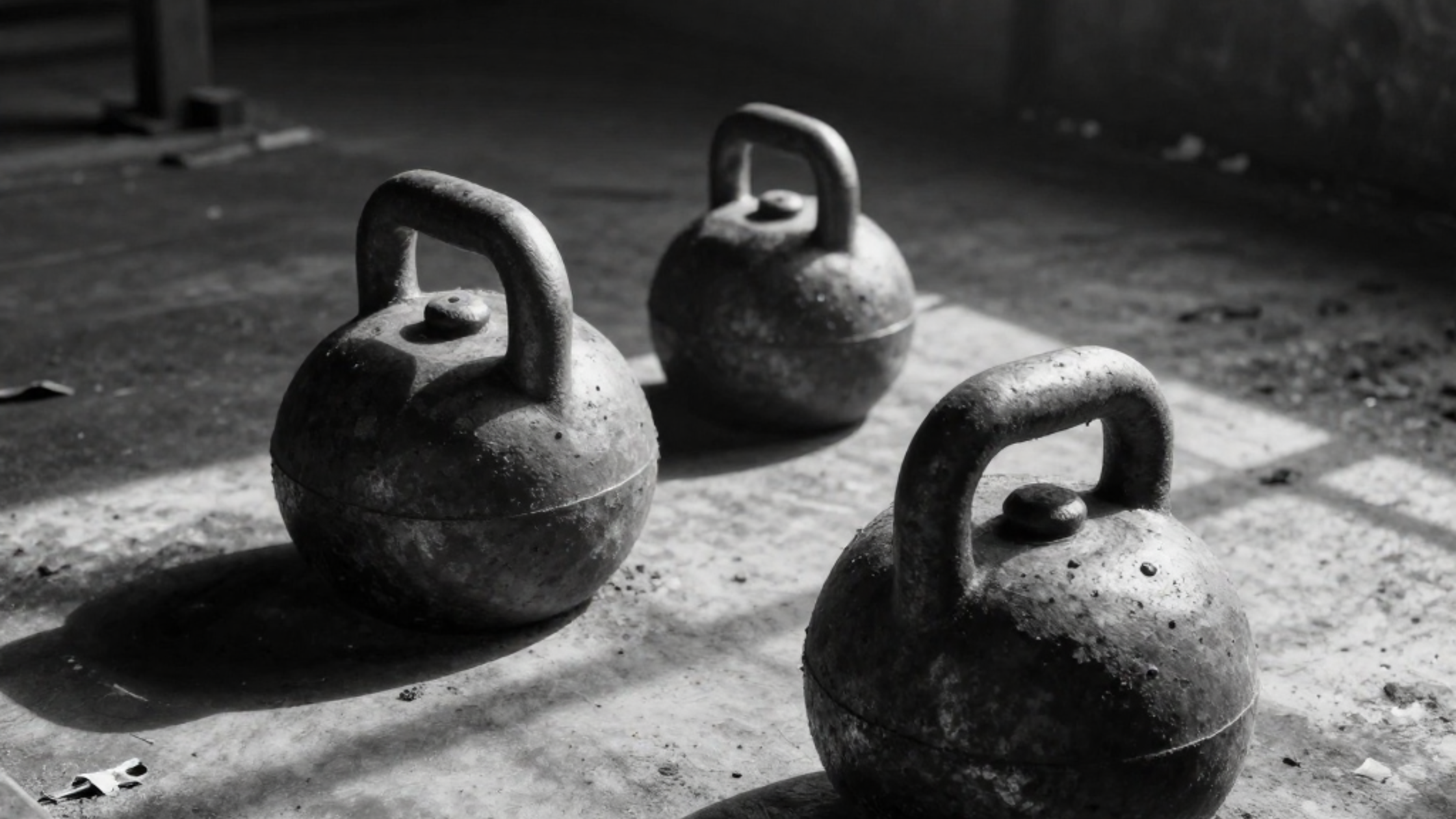
Now, I use weights often. I was a certified personal trainer for six years, always an athlete, and in the gym. Lifting weights is a part of my regular routine if I want to see my body change.
But it’s not the weight that gets the credit; it’s my resistance against the weight that produces the effect I want my physical body to result in. The weight is the catalyst for my change; my resistance to it is helping me develop the results I desire.
Outside of the gym, this becomes harder to recognize. The “weights” are different.
We live in a weighty world. The minute we wake up every morning, we’re surrounded by weights we don’t even see. The inability to recognize them is why so many people feel heavy in their spiritual lives and Christian walks.
Overcommitting to things, needing approval, unprocessed pain, distractions, identity lies we believe, as well as avoiding process to choose comfort. These are real weights—blending in so well with everyday life that we don’t realize we’re supposed to resist them in order to form our character. They seem harmless—like good things or a legitimate thing—and we can justify them away with perfectly carved excuses.
But over time, they get heavy.
Find Your Fatigue
One step is finding where you’re most tired.
- What’s running you down?
- Saying yes to everything?
Comparing yourself to everyone’s highlight reels on social media?
Needing to be seen and known for what you do?
Stopping something you enjoy because you fear rejection?
Fatigue is often a signal that you’ve been holding something too long—spending a lot of time carrying what you were never meant to carry.
Suffering Stability
Another indicator is what has separated you from God.
Usually, stabilizer actions don’t pull you away completely—but one area starts to suffer.
At first, a stabilizer can even feel exciting. Sometimes, the power, the control you have in one moment, relieves the discomfort of unprocessed pain or unmet need. But over time, it can begin to control you.
For example: staying an extra hour or two at work.
You feel productive. Maybe you even make more money if you’re hourly. But those hours add up. They start taking you away from things. What used to help is now a hindrance. You may find yourself more physically tired, unable to shut off at home, irritable, and slowly withdrawing from relationships and from the word of God.
Fragmented Focus
A weight often shows up as anything that steals clarity and single-mindedness. You feel spiritually split. You’re still doing life. Still showing up. But you can’t lock in on what God is asking of you because your attention is being pulled in ten directions.
If it consistently fragments your focus and keeps you from running your race with endurance, it’s probably a weight.
That’s why this verse—only a few words—is extremely powerful. It shapes your ability to reach the greatness God has for you. But you have to be aware. You have to surrender if you want to cross the Red Sea.
Before Moses and the people crossed, Moses had to stop and take account of reality. And in accordance with God’s direction, he lifted up his hand—an image that can mirror surrender and worship. He stretched out his rod—an image of his God-given authority. And then they walked through.
In a sense, we have to do the same thing – surrender/worship, use our God-given authority, and walk through it.
A Bit of Hope
But here’s another beautiful point about this verse.
It starts with the writer saying, “we are surrounded by a large cloud of witnesses.” What I realized here is the perspective. Chapter 12 comes after the previous chapter. Chapter 11 is the heroes’ hall of fame chapter—people of faith, spiritual champions from the Old Testament—and it’s showing us the truth of God through real lives.
I had always believed it was that they were looking at us and cheering us on to keep going, but actually, if you dissect the verse, it’s a prompt to go back and consider those who were able to do it before us.
They are the witnesses to what can happen when you apply faith and push past the weights.
Abraham, Noah, Enoch—all of them—even Rahab the prostitute—laid aside weights in their lives, mindsets, etc. and moved in faith toward God’s will. Their personal limitations didn’t stop them.
Christians, unfortunately, focus so much on “not sinning” that we forget that weights also limit us and take us from God’s ultimate best for our lives. Could it be possible that if we can lay aside the weights, maybe sin won’t even be part of our equation the same way? Laying aside means removing the garment—taking off the layer that’s weighing you down.
Did you know that in much of ancient Greek athletics, male competitors often trained—and frequently competed—nude?
Brings a whole new perspective to the verse, doesn’t it? Fittingly, gymnasium comes from Greek gymnós (“naked”), via gymnásion—a place associated with “training naked.” Why would they do that? Well, they appreciated the human form, and it also encouraged greater freedom of movement.
So run your race without encumbrance. (Figuratively, please, not literally—getting arrested for indecent exposure will not help in this situation.)
And remove the garments of heaviness that weigh you down because your faith can only exist well if it is running. You need endurance for that. This is the good fight—the race of faith, and you don’t want to be the reason you didn’t finish well, right?
 Becoming Invincible